


Pentagon Rolls Out AI Medical Scribe in Clinical Care
The Pentagon is deploying AI-powered ambient listening tool across military treatment facilities to modernize care delivery.

The War Department has deployed an AI-powered ambient listening technology across its military treatment facilities worldwide, making the capability available across the DHA enterprise.
Known as the Clinical AI Agent, the system uses voice recognition and generative AI to capture conversations between clinicians and patients and generate draft clinical documentation in real time, said Col. Tara Conner, chief health informatics officer at DHA.
“It acts as a highly trained medical scribe, allowing clinicians to focus entirely on the patient rather than looking at a computer screen,” Conner told GovCIO Media & Research.
How Ambient Listening Works
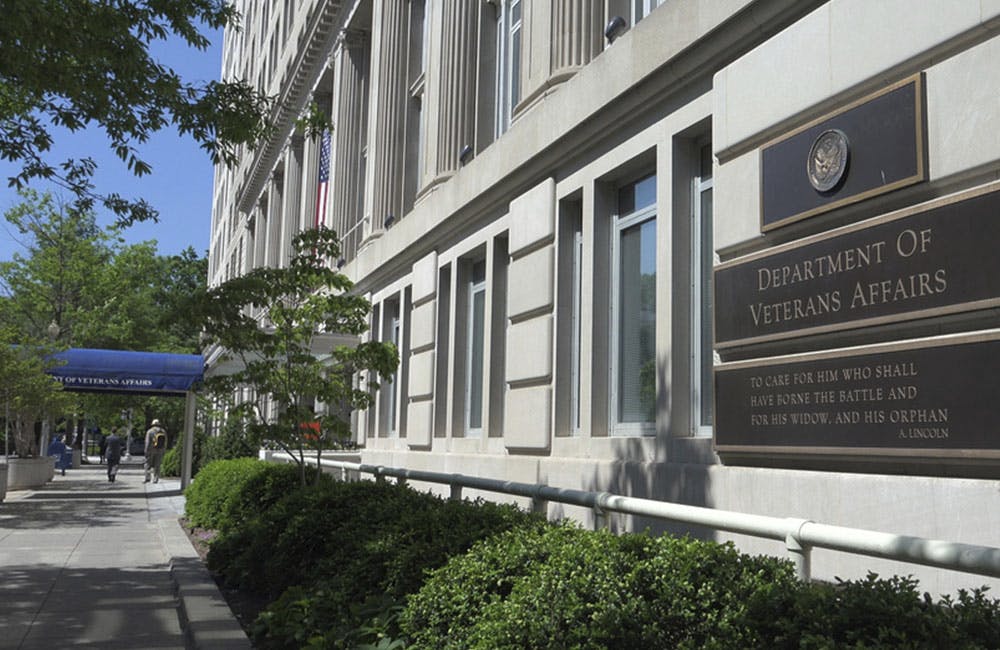
The War Department and the Department of Veterans Affairs are both deploying AI-powered medical documentation tools to improve patient care while reducing clinicians’ administrative workload. However, Conner said the two departments are managing their technology deployments and vendor integrations independently.
At the beginning of an appointment, and only with the patient’s consent, the clinician activates the Clinical AI Agent. The system listens to the conversation, identifies clinically relevant information and generates a draft clinical note.
Providers must review, edit if necessary and approve the AI-generated documentation before it becomes part of the patient’s electronic health record, Conner said.
The technology is designed to reduce documentation time, ease administrative burdens and help address clinician burnout by allowing providers to spend more time engaging directly with patients.
“This efficiency allows providers to maintain eye contact and give patients their full, undivided attention, resulting in more natural, detailed conversations and improving the overall medical care experience,” Conner said.
Ambient Listening Integrates With MHS Genesis
The Clinical AI Agent integrates directly with the War Department’s MHS Genesis electronic health record system, allowing draft documentation to flow into a patient’s chart for provider review.
“Once the provider finalizes and signs the clinical note, it is added to the patient’s record, where beneficiaries can directly access it via the MHS Genesis Patient Portal,” Conner said.
DHA will update the platform based on user feedback, including improvements to note formatting and specialty-specific workflows.
The Clinical AI Agent was first tested during a pilot program that ran from Oct. 31 through Dec. 11, 2025, at four military treatment facilities:
- Madigan Army Medical Center at Joint Base Lewis-McChord, Washington
- Naval Medical Center Camp Lejeune, North Carolina
- Naval Medical Center Portsmouth, Virginia
- Wilford Hall Ambulatory Surgical Center in San Antonio, Texas
Following the pilot, DHA expanded the technology across its enterprise. Conner said the agency is now focused on local implementation, expanding provider use cases and driving adoption.
The deployment also directly supports the “Artificial Intelligence Strategy for the Department of War,” which aims to convert the Pentagon into an AI-first warfighting force.
“By rapidly fielding this technology at an enterprise scale, the DHA is executing its mandate to modernize care delivery,” Conner said.


This is a carousel with manually rotating slides. Use Next and Previous buttons to navigate or jump to a slide with the slide dots
-

Lawmakers Weigh Frontier AI Safety Next Steps From Joint Accord
Some tech stakeholders said limiting unintended consequences of AI agents means the industry’s incentive structure has to change.
-

HHS Looks to Centralize IT Buying, Speed Access to Emerging Tech
HHS is centralizing IT procurement while pursuing faster acquisition tools for AI and other emerging technologies.
9m watch -

Intel Chief Jay Clayton Heads ‘Super Intelligence Force’ as AI Czar
President Donald Trump names DNI Jay Clayton White House AI czar to lead a new Super Intelligence Force coordinating federal AI efforts.
3m read -
VA Pharmacy Upgrades Bring New AI Capabilities to EHRs
The agency incorporated feedback from pharmacists in tech upgrades that add AI capabilities and streamline prescription workflows.
3m read


