i-VA Interoperability Platform Brings in Multiple Health Data Points for Integrated View

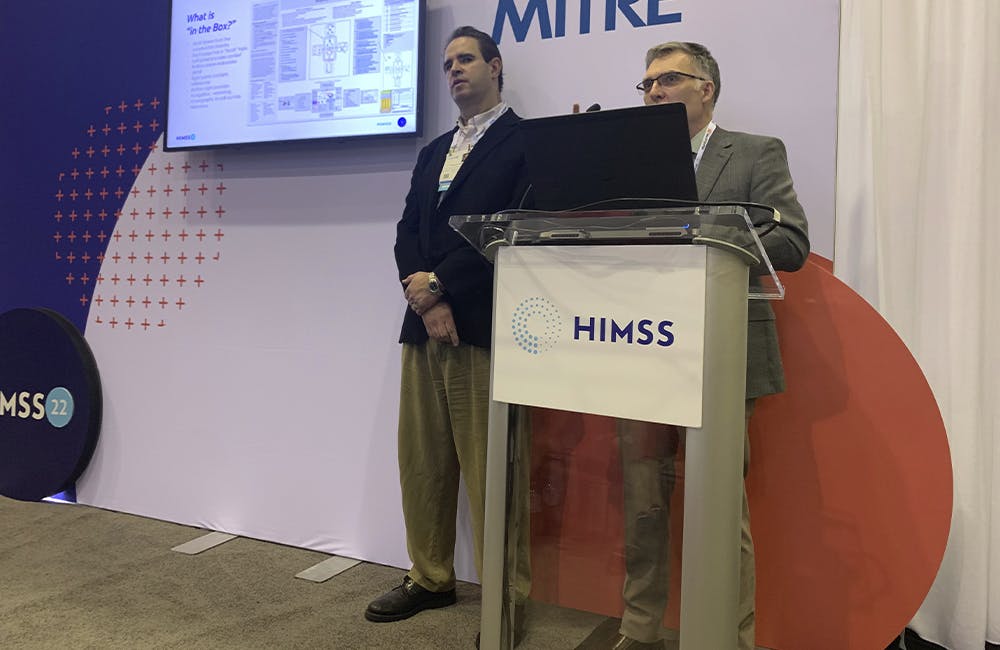
The Department of Veterans Affairs (VA) is developing a new “one stop shop” data management system to improve interoperability and clinical decision-making.
“Many people view interoperability as a technology challenge, but it’s not exclusively a technical challenge. It’s really a business challenge that ties into the technology,” Kenneth Rubin, VA’s senior advisor for standards and interoperability, said Tuesday during the HIMSS conference in Orlando, Florida. “Interoperability cannot be solved piecemeal.”
Because VA is the largest integrated health care system, one of the challenges the agency has faced is linking all its functions into a unified operation. To improve the agency’s interoperability capabilities, the agency developed Interoperable VA Blueprints, or i-VA, to provide guidance on how business needs, industry standards and systems can be linked together to improve veteran health solutions and outcomes.
i-VA provides an integrated view of the veteran with interoperability as a key cornerstone. The information hub has distilled hundreds of pages of content, data and information into a 22-page document to coherently display veteran information and improve decision-making for clinicians.
Throughout the development process, VA aimed to create a single platform that was consumable to users from all backgrounds. The platform integrates iconography to display data visualizations that ultimately improve understanding of key levers that drive health decisions.
“We wanted an integrated view,” Rubin said. “Think classic architecture … for the blueprints, we have a data view, we have a semantics view, we have a systems view, we have a business view. … One of the things this is illustrating is how the veteran fits in the broader health care landscape.”
From these blueprints, VA developed a list of key takeaways. The first is the platform provides an improved view of the veteran and their health journey, as opposed to VA as an agency. VA has included different types of data, like situational, longitudinal, patient preference and reference. The variety of data will better annotate the complexities across the veteran health landscape.
“It’s not about the VA, it’s about the veteran,” Rubin said. “While VA does have connections to community health providers, laboratories and first responders, the veteran might not be directly taking advantage of that. … I have just as much of an obligation to support veterans that don’t receive their care at VA as those that choose to.”
Rubin explained that to make an interoperable system fully functional, interoperability must be built in at the beginning of the product lifecycle. VA’s Interoperability Leadership Team, or VAIL, unifies business, data and systems to provide the right services at the right time to the right person in the right way so that they can make an informed decision and act on it.
“It starts at the design stage,” Rubin said. “To support a seamless care experience between private care and VA, then we have to think about the community at the earliest stages of the program. We have to plan this from the get-go, figure out what we have, then make informed decisions.”
This is a carousel with manually rotating slides. Use Next and Previous buttons to navigate or jump to a slide with the slide dots
-

Building the Military Health System’s AI Ecosystem
DHA and Red Hat discuss building a secure AI ecosystem, strengthening data foundations and ensuring safe AI use in military health care.
31m watch -

White House Memo Centralizes IT Contract Oversight Under CIOs
The new OMB memo gives CIOs sweeping approval authority and mandates shared pricing data to end duplicative tech purchases.
2m read -

White House AI Framework Revives Early Internet Governance Debates
Trump administration’s National AI Legislative Framework echoes Web 1.0 tensions over liability, innovation and federal preemption.
4m read -

Marine Warfighting Lab Turns Lessons from Ukraine into Future Strategy
The Marine Corps Warfighting Laboratory uses wargaming and simulation to analyze threats, test capabilities and prepare for future conflicts.
12m listen