Navy Expands Black Pearl Capabilities to Drive Operational Resilience
The Department of the Navy’s Black Pearl software factory and Innovation Adoption Kit boost software development and operational resilience.

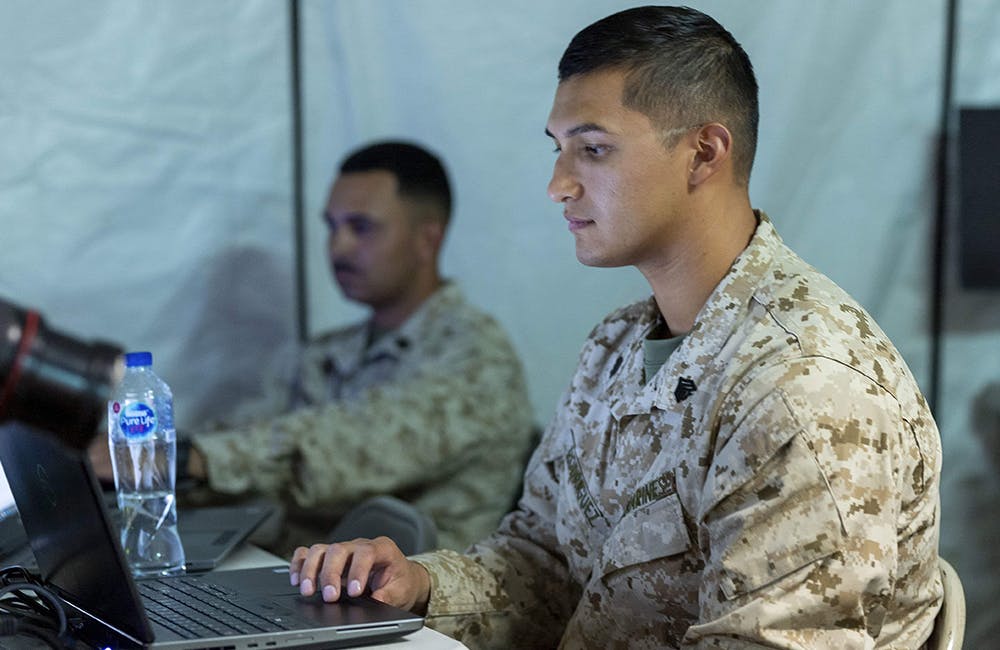
The Department of the Navy (DON) is expanding capabilities at its Black Pearl software factory to promote faster, more secure software development, said Michael Schweitzer, senior advisor for DON’s PEO Digital Technical Director and CTO, on Tuesday at the 2025 Carahsoft DevSecOps Conference in Reston, Virginia. The expansion of the software factory, along with the Innovation Adoption Kit, is increasing DON’s operational resilience, he added.
Black Pearl Software Factory Enables Operational Resilience
Black Pearl has transformed how the DON engages with industry, fostering closer alignment with the Navy’s mission, Schweitzer explained.
“We want [industry] to improve our operational resilience. We want you to tell us quantitatively how your interventions are going to improve our security across the board,” said Schweitzer. “The dialog changes from, ‘We think we know exactly what we’re doing,’ to, ‘Hey, industry, we know what our objectives are. We know what our mission outcomes are. You articulate to us how you’re going to improve that.’”
Schweitzer said the expansion at Black Pearl has also increased the security and speed of their capabilities.
“That consolidation into an enterprise software factory also opens up dollars and velocity,” said Schweitzer. “So by killing some of the competing software factories and consolidating into one, you’re actually increasing velocity, as well as finding dollars to scale new capability because [you] can’t identify a legacy target to divest from. If you want us to scale a net new capability, you have to kill a legacy capability.”
Aligning Policy and Process to Phase Out Legacy Systems
The Navy’s Structure Divestment Approach is driving efforts to consolidate and retire outdated legacy platforms. According to Schweitzer, this process could be more effective with stronger incentives.
He proposed offering a 10% return to vendors who help eliminate legacy systems. If a vendor introduces a new capability and can demonstrate cost savings by retiring the old system, Schweitzer believes 10% of those savings should go back to the vendor. This, he said, would motivate industry partners to identify and phase out obsolete technologies across the DON. Schweitzer noted that gaps in policy and process currently fail to incentivize industry partners or federal employees to retire legacy systems.
“In industry, if you’re able to shut down a branch because you don’t need it, because it’s not profitable, you’re going to get rewarded. In government, we haven’t done that,” said Schweitzer. “I think if you change that framing and incentivize individuals, you’ll get a bigger reward. I think if you incentivize contracts, you’ll force government to do that a little bit better.”
DON’s Innovation Adoption Kit Boosts Speed
The Innovation Adoption Kit (IAK) has helped DON integrate new technologies and boost its DevSecOps capabilities. The kit features a series of plays designed to bridge the valley of death between commercial technology and military implementation.
“Literally every single play in there is from an industry framework or from another defense partner. We conducted a study and had it validated. They ran it against seven fortune 20 companies, as well as a few other Fortune 500 companies,” said Schweitzer. “Ultimately, the results came back consistent that this was a good combination of frameworks to put together to help us move a little bit faster.”
Schweitzer highlighted the adaptive roadmaps within the IAK, which consolidate investment horizons, execution schedules and campaign plans, along with world class alignment metrics like user time lost, adaptability/mobility, operational resiliency, customer satisfaction and cost per user.
“There’s great data out there on how much different incidents cost depending on the size of an organization. Adaptability and mobility is how quickly can you make engineering changes, DevSecOps, and then how quickly can you do the contracting for it,” said Schweitzer. “Customer experience is really an aggregate of all of those, because when you save users time and you provide very efficient capability, usually customer experience increases.”
This is a carousel with manually rotating slides. Use Next and Previous buttons to navigate or jump to a slide with the slide dots
-

Pentagon SWFT Responses Back Shift to Continuous Software Authorization
Industry feedback urges the Pentagon to end checklist compliance and adopt data‑driven trust models as SWFT modernizes software acquisition.
4m read -

Executing the RMF as an Engineering Discipline, Not a Paperwork Exercise
The Risk Management Framework aligns security with system design and operational telemetry to enable continuous, real-time authorization.
6m read -

Opinion: The Case for Security-Embedded Architecture with cATO
cATO is transforming federal cybersecurity by embedding security into system design from the start, enabling faster, more secure innovation across agencies.
10m read -

New SHARE IT Act Mandates Federal Code Sharing to Cut Software Costs
Agencies are under pressure to make code public, with CMS leading efforts to drive open-source collaboration and governmentwide savings.
5m read