


VA Acting CIO Focuses Tech Strategy on ‘Cyber Dominance’
VA OIT is restructuring its workforce, revamping risk management and modernizing tech acquisition to deliver secure, efficient services.

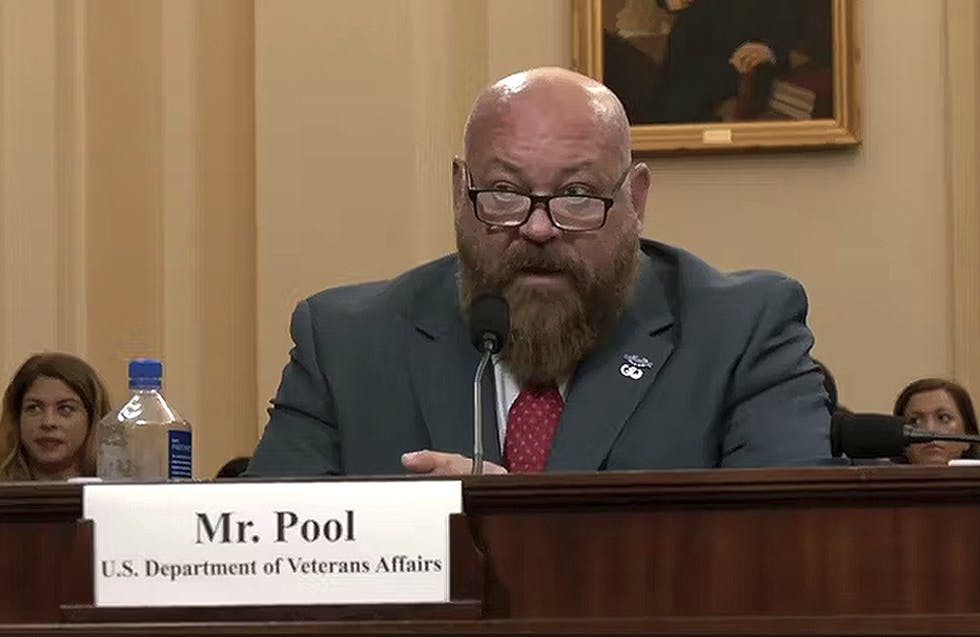
The Department of Veterans Affairs Office of Information Technology is undergoing a significant overhaul, realigning its workforce, streamlining operations and bolstering cyber defenses to deliver faster, more secure services to veterans, Acting CIO Eddie Pool told GovCIO Media & Research in an interview.
The agency is prioritizing “cyber dominance,” Pool said, to safeguard data and bolster veteran trust. Pool likened himself to a train conductor, saying he works to make sure “all the trains stay on track, going to the right places, and we’ve got the right people on board to get to those destinations.”
Leveraging Tech and Talent to Drive Efficiency
As part of its strategy to bring the VA closer to veterans, OIT is reallocating resources to strengthen, sustain and enhance critical functions and bolstering technology and talent recruitment. Pool told congressional leaders in July that OIT is realigning its workforce to drive innovation and process automation for the veteran rather than support agency bureaucracy.
Nearly 17,000 employees left the VA between January and June 2025, and the agency expects an additional 12,000 to depart before September 30. Pool said OIT has approximately 8,205 full time employees, but emphasized “the goal is not to reduce, necessarily, any numbers but to make sure that we’re optimizing how we allocate those resources.”
“It’s process efficiency. We’re streamlining a lot of our operations and leveraging automation in a whole new way. In doing so we’re maximizing our efficiency and productivity with a much leaner and more capable workforce,” Pool said.
VA OIT is implementing targeted recruitment to fill gaps in the workforce and bring in “fresh talent and expertise in emerging technologies, cybersecurity operations [and] engineering,” Pool said.
That culture of internal collaboration and process efficiency also includes specialized training, which Pool said contributes to efforts to continuously develop the agency’s cyber workforce.
Streamlining Risk Management and Tech Acquisition
VA OIT is shifting its mindset to proactively address gaps in knowledge, expertise and service as it implements solutions using new technologies, according to Pool. The agency is overhauling its risk management approach to develop more dynamic, threat-informed cyber defenses.
“We’re shifting away from what traditionally has been a compliance-based checkbox approach to compliance measures,” Pool said. “Proactive risk mitigation [enables VA] to stay ahead of evolving threats and not necessarily just focus on whether or not we have compliance in certain areas, but really moving it to the fight.”
VA OIT is also moving from a one-year IT appropriations cycle to a three-year cycle, which Pool said gives his office “greater flexibility in how we acquire tools and technologies — particularly in the cyberspace — without the constraints of some of the rigid fiscal year cycle processes that really are significant challenges.”
Pool said that, as the agency restructures its workforce and processes, opportunities provided by the Trump Administration have helped his team make large strides toward delivering better services to veterans.
“The opportunities presented by this administration are unprecedented. We have the opportunity to make changes that normally would be very difficult and we’re doing those in real time and we’re seeing the direct benefit in the way that we deliver services to veterans every day,” Pool said.

This is a carousel with manually rotating slides. Use Next and Previous buttons to navigate or jump to a slide with the slide dots
-

How Agencies are Moving from AI Pilots to Mission-Ready Workflows
Officials explore the data foundations, experimentation strategies and security safeguards needed to put AI into practice.
41m watch Partner Content -

Inside ASPR’s Efforts to Bolster Healthcare Sector Cyber Resilience
HHS ASPR’s Bob Bastani details how governance, standards and migration planning can help against emerging threats to medical data and devices.
12m watch -

Modernizing Army IT for AI
Army CIO Gabe Chiulli and CDO David Markowitz explain how Army technology modernization is powering AI at the tactical edge. Sponsored by Knox.
44m watch Partner Content -

White House, CISA Ramp Up Critical Infrastructure Security Efforts
Federal agencies are strengthening industry ties to secure critical infrastructure, build the cyber workforce and address vulnerabilities.
3m read


