


Kratsios Brings AI, 5G, Future Tech to OSTP Forefront
The former federal CTO’s return to the White House signals renewed push for U.S. innovation in emerging technology.
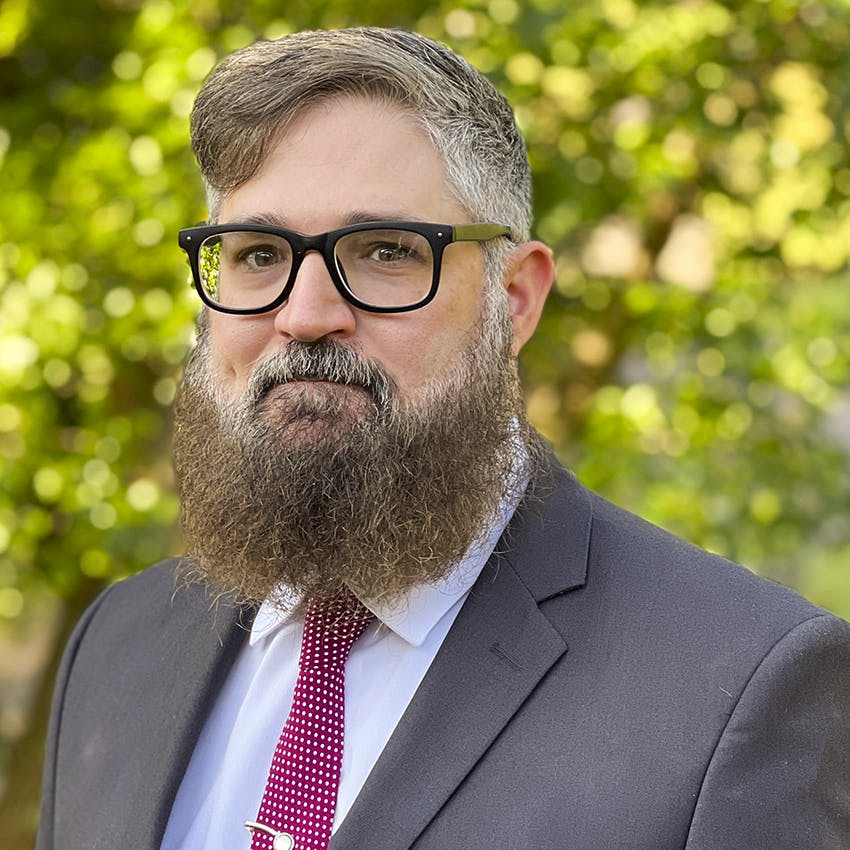

The Senate last week confirmed Michael Kratsios to be the director of the White House Office of Science and Technology Policy (OSTP) and the science advisor to the President last week, bringing him back to a role he held for a time during President Donald Trump’s first term. The Senate approved Kratsios with a bipartisan vote of 74-25.
During Trump’s first term, Kratsios spearheaded initiatives in artificial intelligence, 5G and other technology initiatives. Krasios led the “Artificial Intelligence for American Industry” summit in Washington in 2018 and stewarded $1 billion in research in 2020 to advance “industries of the future.”
“As history has shown, America is a country of thinkers, doers and innovators. The United States is the proud home of the greatest technological breakthroughs the world has ever known, from creating the modern Internet to putting humans on the moon,” he wrote in 2020 of the initiative. “Emerging technologies like AI and [quantum information science] QIS will lead to transformative benefits for the American people in health care, communications, manufacturing, agriculture, transportation, security and beyond.”
In his role leading OSTP, Kratsios will play a critical part in advancing AI other technological policy priorities. During his confirmation hearing, he emphasized the importance of federal funding for research and development to ensure the U.S. remains at the forefront of global innovation.
“I look forward to, if confirmed, working on the AI action plan with other members of the White House and other agencies,” said Kratsios during his confirmation hearing in February. “The most important thing, when you think about applying an AI strategy across the agencies, is to think very carefully and critically about what the individual missions of the various agencies are and align the policy actions associated with the strategy to the mission,”
Kratsios also echoed the Trump administration’s notion that a more favorable regulatory environment is integral to American AI leadership and that such an ecosystem will foster private-sector investment to drive technological advancement.
“We have to lead the world in creating a regulatory environment that allows our artificial intelligence companies to grow and succeed in the U.S.,” he told the Senate. “We have to create an environment where our workforce can actually thrive and take advantage of new technology and … work with like-minded partners to ensure that U.S. AI becomes the default AI of the world versus some of our adversaries.”
As OSTP Director, Kratsios will oversee the administration’s efforts to address critical policy challenges in science and technology innovation. He promised to address issues with expertise and scientific rigor.
“As director, I will build a deep bench of policy experts to ensure that the President and that the White House have a necessary technical advice to meet the challenges of our moment,” he said during his confirmation hearing. “The only way to do so will be to double down on what has made our history of innovation so great, the uniquely American free market approach to scientific discovery, which harnesses the combined strength of government, industry and academia.”
Kratsios’s confirmation has been met with praise from various quarters. Industry leaders and government officials have lauded his expertise and vision for the future of science and technology. Senate Commerce Committee Chair Sen. Ted Cruz said that he is confident in Kratsios’s ability to “unleash American innovation” and Trump wrote that Kratsios is tasked with building “new paradigms for the research enterprise, including innovative models for funding and sharing scientific research, redefining how America conducts the business of discovery.”
According to LinkedIn, Kratsios recently served as managing director at Scale AI between his stints at the White House. He also briefly served as acting under secretary of defense for research and engineering at the Defense Department.
In a statement before confirmation, Kratsios expressed his dedication to advancing American dominance in AI, emerging tech and breakthrough science.
“Under the president’s leadership, we will unleash the ‘Golden Age’ of American Innovation,’” he said.

This is a carousel with manually rotating slides. Use Next and Previous buttons to navigate or jump to a slide with the slide dots
-

Building a Secure Foundation for AI in Federal Health
HP Federal CTO Tommy Gardner discusses how edge AI, cybersecurity and responsible adoption are shaping federal health IT modernization.
9m watch -
Trump Order Aims to Speed Veterans' Benefits Through DOW-VA Data Sharing
A new executive order directs DOW and VA to improve military records sharing and modernize IT systems to speed veterans’ access to benefits.
3m read -

Public-Private Threat Sharing Could Give Defenders an Edge
Industry and government professionals say they will ultimately have the tactical advantage around threats as long as they work together.
4m read -

This National Lab is Using Multi-Agent AI to Accelerate Scientific Discovery
SLAC’s John Sarrao details how AI is accelerating materials discovery and reshaping collaboration across national labs and federal agencies.
21m watch


