Pentagon Consolidates DIU, CDAO Under R&E to Streamline Innovation
Under Secretary Emil Michael consolidates DIU and CDAO to cut duplication and sharpen modernization efforts.
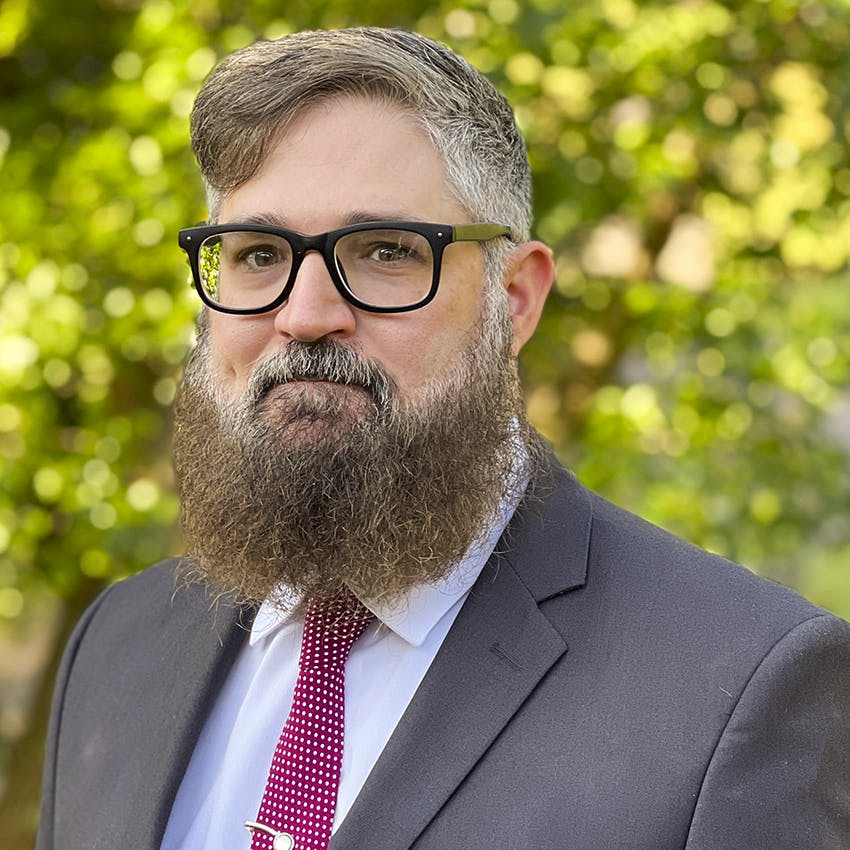

Under Secretary of Defense for Research and Engineering (R&E) Emil Michael confirmed Monday that the Defense Innovation Unit (DIU) and the Chief Digital and Artificial Intelligence Office (CDAO) have been consolidated under his purview to focus and speed War Department innovation.
“Duplication is a broad challenge in the Pentagon. I’m trying to do my part to tackle that, and that’s part of the reason for some of this consolidation of the DIU, CDAO into R&E,” Michael said during the Defense Writers Group roundtable on Dec. 8. “I can deconflict three organizations and work more closely with each of the service component [offices].”
Michael described the move as essential for reducing bureaucratic redundancy and ensuring the department’s Chief Technology Officer has direct oversight of the tools necessary to modernize the force.
“We consolidated the Chief Digital AI officer into R&E. We consolidated DIU … into R&E, so that the Chief Technology Officer role that I also hold has greater purview on the new technologies that we’re trying to implement across the system,” Michael told reporters.
The reorganization comes as the War Department attempts to pivot from a procurement system built for counter-insurgency to one capable of addressing “near peer” threats from China and become more technologically forward, Michael said. War Secretary Pete Hegseth has called for the department to buy technology that centers “speed and volume above all else” while preparing for the future of war.
Sharpening Innovation Focus
The consolidation is also intended to sharpen the focus of the innovation organizations across the department. For example, Michael noted that the DIU previously managed as many as 133 concurrent projects, a volume that made it difficult to transition research to implementation.
“Focus is better,” Michael said, adding that he is currently conducting portfolio reviews to potentially consolidate efforts. “It’s very hard for services to absorb that much capability.”
A New Direction for AI
Under the new structure, CDAO and DIU move away from in-house AI development and turn to industry to provide innovative tools. Michael characterized early efforts to build bespoke DOW AI capabilities as a “dead end,” noting that the commercial sector — led by giants like OpenAI, Google and Anthropic — has already invested hundreds of billions in infrastructure that the Pentagon should leverage rather than replicate.
“We’re going to push deployment of these capabilities directly to … some portion, if not all, of the 3 million users at the Pentagon,” Michael said.
He outlined three primary use cases for the “applied AI” strategy: enterprise efficiency, intelligence analysis and warfighting functions like logistics and modeling. Michael said that the new alignment will make CDAO more impactful under Doug Matty, who was named CDAO’s chief in April and will remain in that spot, Michael confirmed.
“[CDAO] had some excitement around it, and there were some great engineers there, but because it wasn’t moving to capability, a lot of the good talent left. I’m trying to rebuild talent,” Michael said. “They’re going to learn a lot. They’re going to have great impact … so that we can have these use cases be successful.”
Opening Up Acquisition
The realignment also aims to smooth the path for new entrants into the defense industrial base. Michael said that firms like SpaceX, Palantir and Anduril had to navigate the protest and legal systems to enter the space.
“We’re going to try to [ensure] you don’t have to sue the government to get your first big contract. You have to deliver to get your first big contract,” Michael said.
To support this aggressive shift, Michael is personally leading a “recruiting binge” to attract talent from the private sector to fill DIU and CDAO. He said that public service can’t always compete with private sector salaries but emphasized the appeal of the mission.
“I’m in this for as long as they’ll have me,” Michael concluded. “The department hasn’t caught up … every day, I kind of wake up with that sense of urgency.”
This is a carousel with manually rotating slides. Use Next and Previous buttons to navigate or jump to a slide with the slide dots
-

Inside the Army’s FUZE Model for Rapid Tech Deployment
FUZE Director Matthew Willis explains how the Army is using a venture-style investment model to move emerging technologies from prototype to the field faster.
10m listen -

DOL’s AI-Ready Initiative Gains Early Traction with Nationwide Rollout
A new seven-day AI course from the Labor Department uses mobile learning to boost AI literacy nationwide.
3m read -

Study Highlights Untapped Potential of National Guard in Cyber Missions
Title 32 authorities could enable National Guard cyber teams to support federal missions without major policy changes.
4m read -

Building the Military Health System’s AI Ecosystem
DHA and Red Hat discuss building a secure AI ecosystem, strengthening data foundations and ensuring safe AI use in military health care.
31m watch