


VA Sees Natural Disaster Response as Part of Agency’s Fourth Mission
The Department of Veterans Affairs has been dispatching medical personnel and other support to areas impacted by extreme weather activity.

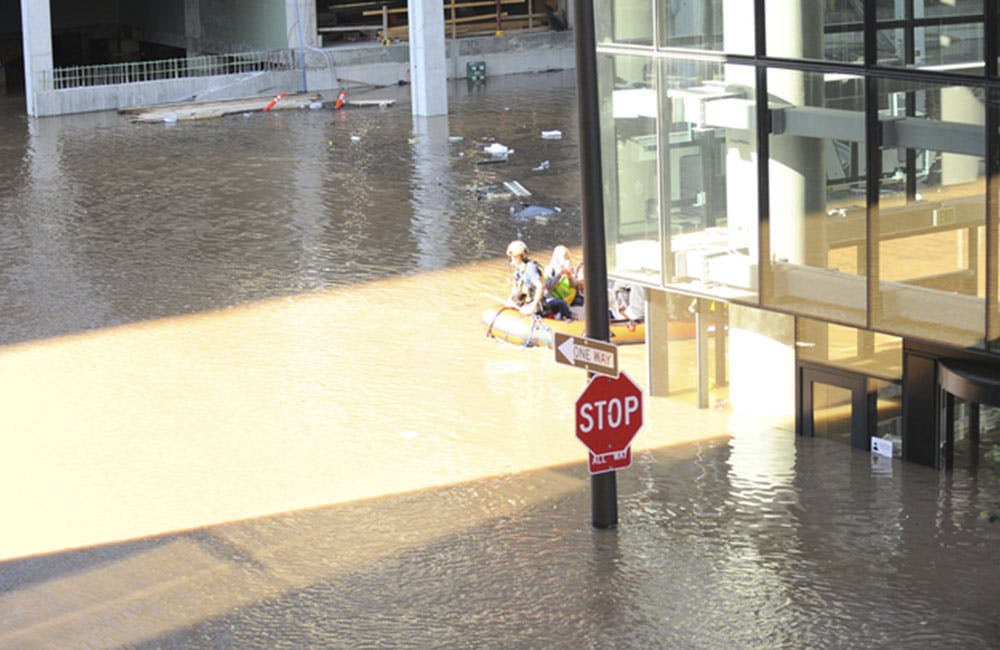
The Department of Veterans Affairs is dispatching medical personnel and other support to areas impacted by Hurricane Ida, a process Secretary Denis McDonough said is vital to the agency’s mission. The agency is also requesting budgetary support to better enable VA to respond to storms and other natural disasters.
The agency has mobilized this Fourth Mission, or obligation to provide medical support and other forms of emergency assistance during times of national crisis, in the wake of the COVID-19 pandemic during situations of overflow within civilian hospitals. And amid Hurricane Ida, the agency extended its support by providing refuge to displaced veterans, including opening space in VA centers located within the Louisiana cities of Shreveport and Monroe where the hurricane made landfall late last month.
This emergency response process also includes dispatching VA employees to crisis areas, a process the agency has overseen following recent natural disasters.
“VA employees have been on the ground for every emergency that’s happened over the past couple of months,” said VA Secretary Denis McDonough at a recent press conference with reporters in Washington, DC. “For example, in response to Hurricane Ida, more than 180 VA employees have deployed to Louisiana as disaster emergency medical personnel, otherwise known as DEMPs.”
VA appears to be considering this allocation of labor, facility space and resources to disaster response within its budgetary requests, with the agency requesting funding commensurate to the technical capacities and physical infrastructure necessary to support this scope of response.
“The House has started this process to get us this $18 billion in extra investment in our infrastructure … as we look at that infrastructure investment package, we’re taking a very serious look at how to make it consistent with the requirements in a changed climate,” McDonough said.
McDonough noted that DEMPs will be crucial for supporting areas hit by storm activity and other natural disasters, with this corps representing the forefront of the VA’s disaster response.
“Clinicians in our system can sign up through DEMPS, and we’re doing that both as it relates to intense weather events, but we’re also doing it in the context of COVID,” McDonough said.

This is a carousel with manually rotating slides. Use Next and Previous buttons to navigate or jump to a slide with the slide dots
-

Inside the Federal EHR Modernization Effort
FEHRM CTO Lance Scott discusses efforts to modernize and improve interoperability of electronic health records across the federal government.
7m watch -

DOE Opens Applications for $215M Genesis Mission Competition
DOE's Quantum Genesis Q Competition aims to engage vendors to help build the world's first fault-tolerant quantum computer.
2m read -

Space Force Charts Shift to Warfighting Force for 2040
Officials outlined how new missions, resilient satellites, maneuver and AI are shaping the service’s future force.
3m read -

SSA Targets Growing Threat of AI-Enabled Fraud
SSA is strengthening federal coordination, AI tools and workforce training to detect and prevent increasingly sophisticated fraud schemes.
3m read


