War Department Pushes Faster, More Flexible Acquisition Model
DOW Senior Advisor Keely Galloway outlines a new acquisition strategy focused on commercial integration, portfolio management and iterative development.
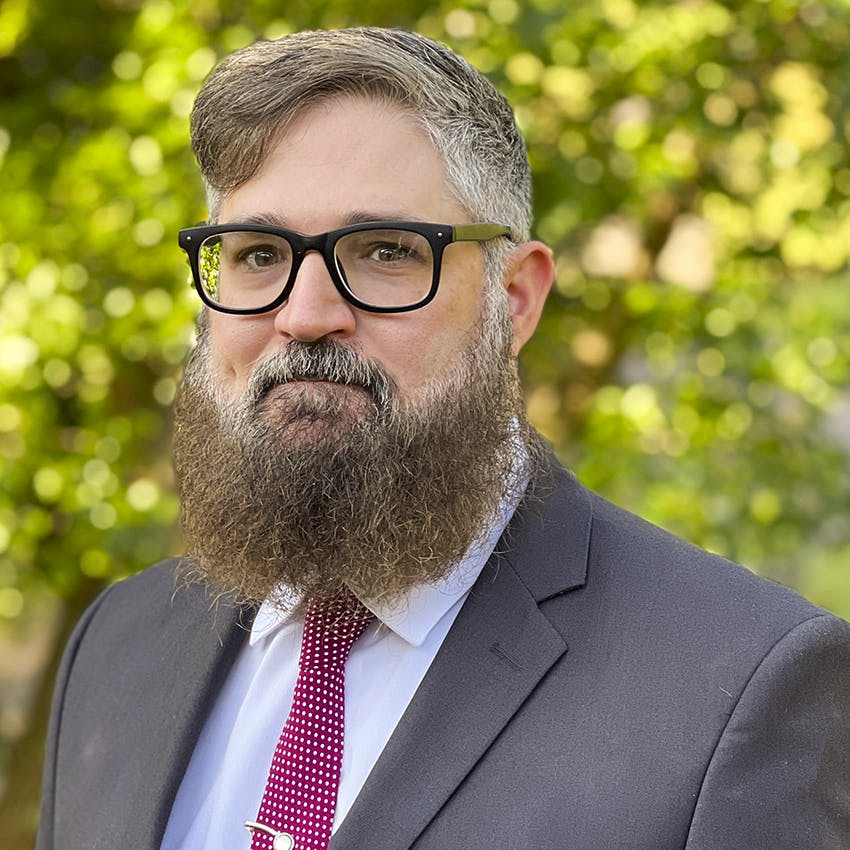

War Department’s acquisition transformation strategy prioritizes speed, flexibility and commercial integration to accelerate innovation across the national security ecosystem, DOW Senior Advisor for Supply Chain Keely Galloway said during GovCIO Media & Research’s Defense IT Summit.
“We need to shift the department’s acquisition process from this impenetrable fortress … to being a magnet for innovation,” Galloway said Thursday. ““We need to reduce risk, encourage smaller, more innovative firms and adopt commercial technologies so we can keep our supply chains robust.”
Central to the strategy is moving away from stove-piped programs and embedding warfighters directly into iterative development cycles.
“It makes sense to be more iterative in our acquisition. Let’s work on fielding that commercial solution first, and then we can work towards building the rest of that capability as we move forward,” Galloway said of the learning process.
Moving Away from Stove-Piped Programs
The strategy creates portfolio acquisition executives (PAEs) who oversee capability portfolios rather than individual programs. Galloway said the previous model — “a collection of stove piped programs” competing for resources — made it difficult to balance long-term modernization with urgent operational needs.
“These PAEs are empowered with an entire capability portfolio … and they’re empowered to make strategic tradeoffs in their portfolios, not just managing cost, schedule and performance of a single program.”
The department is also creating capability trade councils that bring together technical experts and acquisition leaders to assess performance gaps and identify where commercial technologies can accelerate fielding.
“Maybe this other capability is 90% there from a commercial source, and what it makes sense to do is be more iterative in our acquisition,” Galloway said. “Let’s work on fielding that commercial solution first, and then we can work towards building the rest of that capability as we move forward.”
Ending Bespoke Government Systems
Galloway said the department is moving away from custom-built government systems when commercial technologies can meet mission needs. That shift includes simplifying requirements and streamlining processes.
“[We’re] moving away from 1,000-page specifications of requirements that only large incumbents can navigate. We’re focusing on getting commercial prototypes into the hands of our warfighters more quickly,” she said.
The strategy also calls for overhauling the Defense Acquisition University — now the Warfighting Acquisition University — to retrain the workforce in iterative development, commercial technology scouting and responsible risk-taking.
“They’re currently rebuilding their entire curriculum and looking at how we change how we train our acquisition workforce,” Galloway said.
Iterative development, she added, requires a cultural shift. Program managers and PAEs to accept “smart failures,” learn quickly and redirect resources without the fear of career-ending consequences or reprisals she said.
“It’s okay to fail fast because you have multiple different programs going on in this one portfolio looking at similar capabilities,” Galloway added.
Balancing Long-Cycle Programs with Rapid Fielding
The Pentagon’s modernization strategy must reconcile decades-long platform development cycles with the need to field capabilities at the “speed of relevance,” Galloway added. She acknowledged that the budgeting system — particularly the planning, programming, budgeting and execution (PPB&E) process — remains a major constraint, but said stakeholders are all aligned on the need for reform.
“The good thing here is that Congress also agrees that the PPB&E process that the department uses today is not the most agile system,” Galloway said. “Congress just put together a commission to really look into this and determine where we should go in the future.”
In the meantime, the department is using flexible pathways such as middle-tier acquisition, other transaction authorities and portfolio-level funding to accelerate promising prototypes.
Supply chain resilience is another critical factor in balancing speed and stability. Galloway described the department’s new Supply Chain Risk Management Integration Center, which aggregates risk data across services to identify fragile suppliers before they become single points of failure.
“How do we look at those risks collectively so we can raise them up and make the right investments as a department to keep our entire supply chain healthy?” Galloway said.
Enhancing Warfighter Relevance, Adaptability and Collaboration
A key element of the strategy is making warfighters active participants in capability development. Rather than receiving technology at the end of a lengthy cycle, operators will help shape requirements, test prototypes early and provide continuous feedback.
“[Warfighters are] no longer going to be a passive recipient of this technology at the end of this long acquisition cycle. Instead, this is an iterative development process. They’re a partner throughout the life cycle,” she said.
With warfighters in the feedback loop, industry and DOW can iterate systems that are more adaptable and responsive to emerging threats, she added.
“Being able to download a new electronic warfare app overnight to help counter an enemy signal … it’s providing them a level of agility that in today’s environment they don’t have,” Galloway said.
She added that the current moment is built for real acquisition reform. Where other efforts have faltered, leadership inside and outside of the department is aligned with the strategy and its goals, Galloway said.
“The reason this time is really different is we just have this unity of leadership that we’ve never had before, from the White House down through the legislative branch, bicameral and bipartisan. Everybody sees that our acquisition system needs to change,” Galloway said. “And this is a big change. It’s a cultural change, just as much as it is a systematic or a policy or a process change.”
This is a carousel with manually rotating slides. Use Next and Previous buttons to navigate or jump to a slide with the slide dots
-

U.S. Cyber Strategy Aims to Reset Adversaries’ Risk Calculus Amid Iran Threats
Sean Cairncross said the new strategy elevates U.S. cyber response expectations as Iran targets critical infrastructure during Operation Epic Fury.
3m read -

Building the Military Health System’s AI Ecosystem
DHA and Red Hat discuss building a secure AI ecosystem, strengthening data foundations and ensuring safe AI use in military health care.
10m watch -

Geopolitical Tensions Highlight Need for Resilient AI Supply Chains
The U.S. is working with global partners to strengthen AI supply chains and ensure continuity amid growing geopolitical risks.
3m read -

Pentagon Using AI to Protect Supply Chains
Defense agencies are using AI-driven models to detect risks across the Defense Industrial Base as Iranian cyber activity intensifies.
3m read