


White House Order Creates Voluntary AI Framework for Developers
President Trump’s AI executive order directed agencies to expand AI security efforts, modernize IT and strengthen cyber defenses.
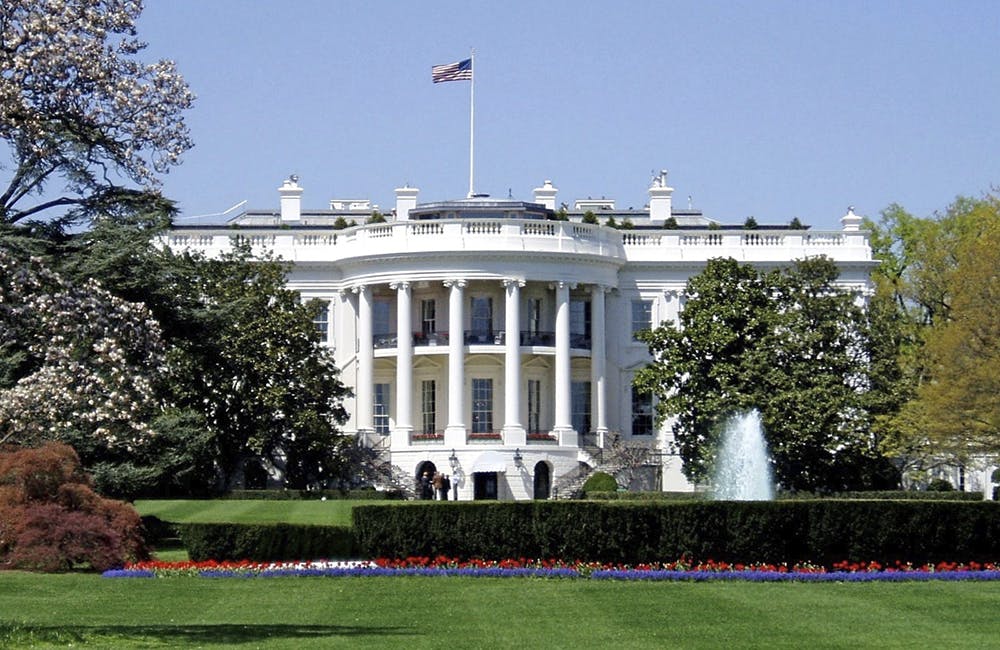
The White House on Tuesday issued a new executive order directing federal agencies to deepen collaboration with industry on cybersecurity, artificial intelligence and critical infrastructure protection, while expanding efforts to modernize government technology and secure sensitive intellectual property.
The order lays out a series of actions federal agencies must complete over the next 30 to 60 days to strengthen cyber defenses and prepare government systems for increasingly sophisticated AI capabilities.
“We will continue to lead an America First cybersecurity effort that enhances both our national security and our global AI dominance,” President Donald Trump said in the order.
Among the requirements, the Cybersecurity and Infrastructure Security Agency, Office of Management and Budget and Office of the National Cyber Director must issue guidance within 30 days to accelerate cyber defense initiatives across civilian agencies and expand the use of AI-enabled cybersecurity tools.
The order also directs the Treasury Department, the National Security Agency and CISA to establish an AI cybersecurity clearinghouse that will coordinate vulnerability discovery, validation and remediation efforts with industry and critical infrastructure operators.
A key focus of the directive is the security evaluation of advanced AI systems. The order calls for creating a classified benchmarking process to determine when an AI system qualifies as a “covered frontier model” and directs agencies to develop a voluntary framework through which AI developers can collaborate with the government on cybersecurity evaluations before releasing new models.
The administration emphasized that participation in the framework is voluntary and cannot be used to establish government licensing, permitting or preclearance requirements for AI systems.
The executive order also expands the federal government’s technology workforce initiatives. Under the directive, the Office of Personnel Management will broaden its Tech Force program to include dedicated hiring and placement pathways for cybersecurity professionals.
Order Released After Delay
The executive order was originally expected to be released in May, but President Trump said he delayed signing it because he believed portions of the draft could undermine U.S. competitiveness in the global AI race.
“We’re leading everybody, and I don’t want to do anything that’s going to get in the way of that lead. We have a very substantial standard on AI — it’s causing tremendous good,” the president said during a May 21 press pool.
The final version of the order closely mirrors the draft circulated earlier this year, but includes one notable change. A proposed voluntary review period for companies participating in the government’s AI evaluation framework was reduced from 90 days to 30 days, shortening the timeline for pre-release cybersecurity assessments of advanced AI models.
OpenAI Chief Global Affairs Officer Chris Lehane called the executive order “an important step forward on an issue that affects national security, critical infrastructure, and communities across the country. As AI systems become more capable, ensuring they are developed and deployed safely will take close partnership between government and industry.”
IBM Chairman and CEO Arvind Krishna lauded the order and noted that securing AI and open-source software is “essential to maintaining trust and ensuring U.S. leadership.”
AI Policy Still Lacks Comprehensive Federal Framework
Though numerous federal laws already apply to artificial intelligence, Congress has yet to establish a comprehensive national framework governing AI. The administration has argued that the lack of a federal standard has created a patchwork of state laws and regulations.
“A patchwork of conflicting state laws would undermine American innovation and our ability to lead in the global AI race,” according to the White House’s National AI Legislative Framework released in March.
That document outlined recommendations for Congress to create a national AI policy framework balancing innovation, national security and consumer protection.
By the end of 2025, all 50 states have introduced AI legislation, according to the National Conference of State Legislatures.
The White House’s December executive order sought to establish a more uniform national approach to AI governance while discouraging state-level requirements.
Several priorities outlined in the administration’s broader AI Action Plan ultimately require Congressional action to become permanent.
For example, the plan directed the Energy Department, the National Science Foundation and NIST to expand the National Artificial Intelligence Research Resource (NAIRR) established as a pilot in 2024. The NAIRR has since expanded as a proven shared national infrastructure to democratize AI research, but has yet to be codified into law.



This is a carousel with manually rotating slides. Use Next and Previous buttons to navigate or jump to a slide with the slide dots
-

Lawmakers Weigh Frontier AI Safety Next Steps From Joint Accord
Some tech stakeholders said limiting unintended consequences of AI agents means the industry’s incentive structure has to change.
-

HHS Looks to Centralize IT Buying, Speed Access to Emerging Tech
HHS is centralizing IT procurement while pursuing faster acquisition tools for AI and other emerging technologies.
9m watch -

Intel Chief Jay Clayton Heads ‘Super Intelligence Force’ as AI Czar
President Donald Trump names DNI Jay Clayton White House AI czar to lead a new Super Intelligence Force coordinating federal AI efforts.
3m read -
VA Pharmacy Upgrades Bring New AI Capabilities to EHRs
The agency incorporated feedback from pharmacists in tech upgrades that add AI capabilities and streamline prescription workflows.
3m read


