


Zero Trust Synonymous with CJADC2 Operations, Navy Leaders Say
The military’s integration of systems under the CJADC2 umbrella will require stronger zero-trust measures.

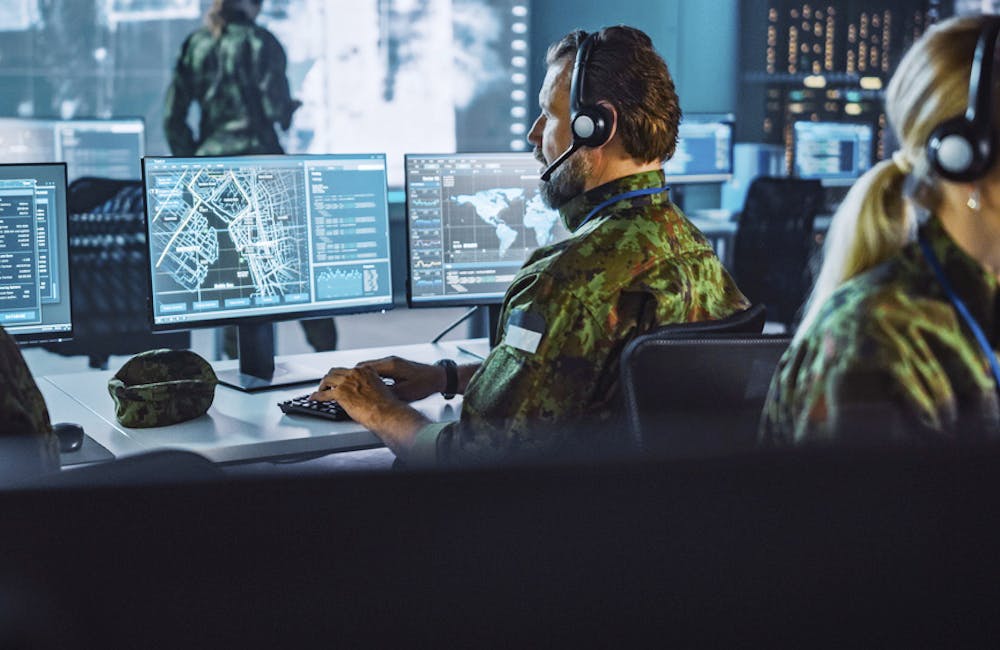
As the U.S. military edges closer to its goal of a united CJADC2 warfighting concept, ensuring the security of its sensors and systems will be critical. The military has adopted a zero-trust approach to cybersecurity in the warfighting space, which enables forces to securely communicate and share data.
Zero-trust systems, like CJADC2, is not a single solution, but a collection of cybersecurity capabilities that enable commanders to make better decisions in the field.
The comment came from Navy Director of Enterprise Networks and Cybersecurity (OPNAC N2N6D) Scott St. Pierre, who spoke on a recent panel.
St. Pierre said the Defense Department must move away from the trusted environments of the 1960s and 1970s and toward an environment where each person’s clearance and access to secure information is verified. St. Pierre added that cybersecurity can’t be an afterthought, but rather needs to be at the forefront of any military system.
Identity management and verification are “key to the whole cybersecurity strategy in accordance with zero trust, not only for those identifying parameters and verifications, but more importantly to help enable the right people with the right clearances to access the correct data at the right time,” said Mark Wiggins, vice president of defense, intelligence and systems integrators at Fortinet Federal.
St. Pierre said it’s critical that a broader perspective is taken at the enclave- and platform-level because JADC2 and zero trust are “synonymous.” He said that when cybersecurity is integrated with command and control systems, combat effectiveness is also improved.
“In order to find the right balance, we have to start treating, and have been since 2006, cybersecurity as a key system attribute of the design of every system we deliver. What we’re doing now with things like JADC2 is we’re taking a step back and looking at it at the enclave level and the platform level as opposed to it just at the individual system level,” St. Pierre said.

This is a carousel with manually rotating slides. Use Next and Previous buttons to navigate or jump to a slide with the slide dots
-

Cyber Experts Highlight Zero Trust's Role Against AI Threats
Experts share why zero trust principles and cyber hygiene practices are key to combatting the growing threat of frontier AI models.
2m read -

Navy Cyber Expert: Post-Quantum Cryptography is Backbone of Zero Trust
The two technologies are converging as War Department officials increasingly prioritize building systems for a quantum era.
3m read -

Agile Acquisition Becomes DISA's New Battlefield Advantage
DODNet leaders say 90-day OTA cycles and flexible engineering models are helping DISA deliver capabilities at the speed of cyber threats.
17m watch -

White House Centralizes Cyber Oversight of Nat Sec Systems
A new memo directs agencies on modern cybersecurity architecture, continuous oversight and standardized reporting.
3m read


