


Talent Management Among Navy’s Highest Priorities

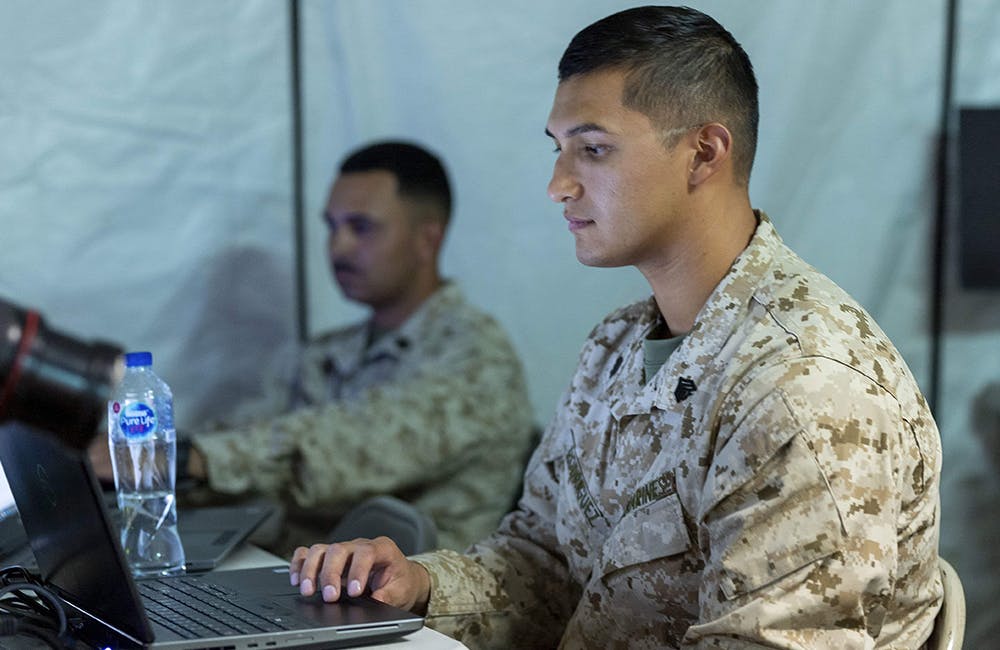
Talent management is one of the Marine Corps’ highest priorities from an investment standpoint right now, Lt. Gen. Matthew Glavy, deputy commandant for information, said at the Navy IT Transformation Forum Tuesday.
Bringing in the talent and skills IT transformation requires and building a modern workforce to maintain the highest levels of readiness and get at the challenges the Navy and Marines face right now are crucial to everyday operations and future planning for the forces.
“There’s no doubt everything starts with talent management,” Glavy said during the panel. “One of the high priorities of the commandant is right now, as he looks at force design, and continuing and executing the transformation of the force, as he looks at talent management, and how we’re going to make sure our best people are put in to match their talents in the most important positions … how we’re going to train and educate them to execute all the warfighting functions are obviously critical to what we need to do every day.”
The mixture of military and civilian workforce across multiple geographically dispersed commands makes talent management a challenging space to synchronize.
Bradley Punch, deputy technical director at Navy Program Executive Office for Digital and Enterprise Services, and his team have had use cases with warfare centers taking what was traditionally paper processes and using automated tools to be able to get the data in and share that data with other systems.
“We have these modern tools and services; now we have to find a way to do business differently,” Punch said during the panel. “We’ve realized in delivering modern services, it’s not enough to just build it and they will come. We need to work on a modern workforce.”
With talent management, determining that resources are managed correctly in their program objective memorandum and fighting the adversary, fusing and correlating data will drive results, Punch noted during the panel. Entering the Office 365 platform has already enabled the Navy overall to improve security and workforce productivity, providing a better look into the kinds of opportunities a modern workplace can offer.
“I think we’ve been complacent with data … we haven’t probably protected it like we should … we just haven’t paid our due diligence to data,” Glavy said. “We are beginning to have more discipline, focus … and the cloud, this idea of mass storage and mass computational power — now we are getting to the almost combined arms scenario.”

This is a carousel with manually rotating slides. Use Next and Previous buttons to navigate or jump to a slide with the slide dots
-

TMF's Rapid Funding Model Helps Agencies Escape Budget Gridlock
With compressed timelines and an 80% project success rate, the TMF helps agencies modernize systems before risks and vulnerabilities escalate.
9m watch -

Building the Foundation for AI
FBI and NIH explore how data modernization and cybersecurity are shaping federal artificial intelligence adoption.
27m watch Partner Content -

The Value of Data Readiness in Federal AI Adoption
Michael Anderson discusses the importance of data readiness for AI and how organizations can build strong data foundations to accelerate adoption.
12m watch -

How Agencies Can Secure Data for a Quantum Future
HP Federal’s Tommy Gardner discussed why agencies must prepare for quantum threats now and how to build quantum-resilient security strategy.
7m watch


