


NSA Looks to Hybrid Cloud Initiative as Future Cyber Model
Gen. Timothy Haugh said the program bringing in commercial cloud solutions to NSA can help the agency speed up cybersecurity modernization.
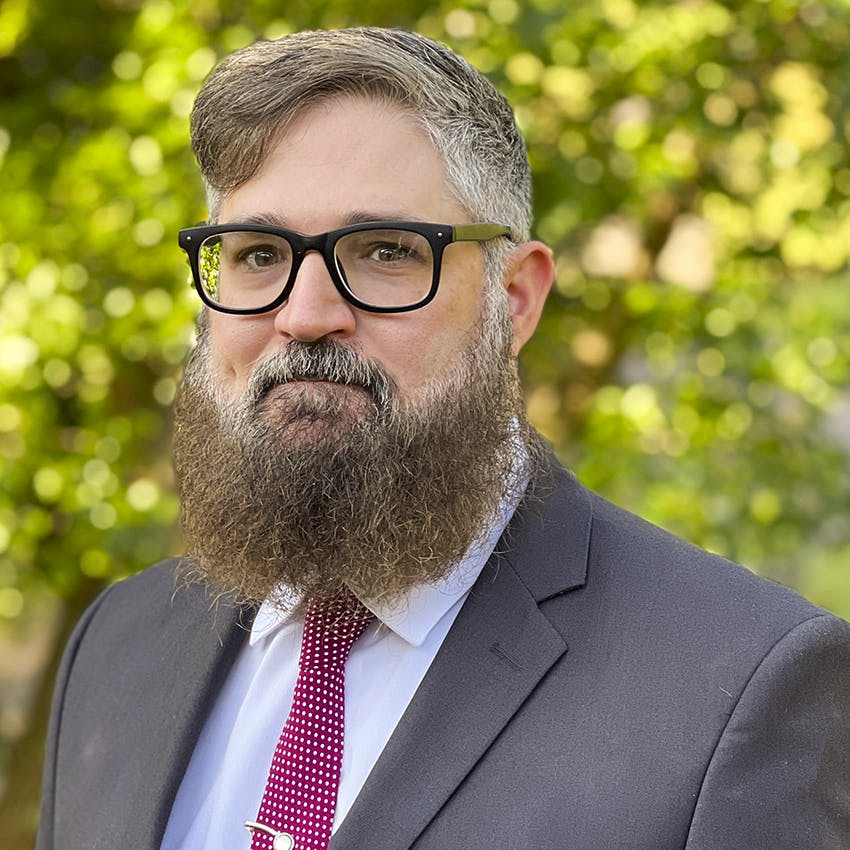

The National Security Agency’s Hybrid Compute Initiative (HCI) represents the future of tailoring industry advancements to NSA’s mission, Cybercom Commander and NSA Director Gen. Timothy Haugh said Thursday at the Billington Cybersecurity Summit in Washington, D.C.
“The Hybrid Compute Initiative is a really good example of what it will look like for our future,” said Haugh. “There are going to be some very unique technology things that will be bespoke within the intelligence community, but we have to be able to leverage the rapid advancements that are occurring in industry.”
Launched in 2021, HCI focuses on using commercial-based cloud computing capabilities in addition to maintaining some operations and data internally on servers. Commercial solutions within HCI must fulfill agency requirements for capacity, security and scalability.
Haugh added that NSA intends to follow industry’s rapid evolution in cloud security to ensure the agency is up to date.
“We cannot ask industry to adapt to us. We have to adapt to industry so that we can take every update and every advancement and leverage them in a more rapid and clear way,” said Haugh.
Haugh said that HCI can be a blueprint for NSA to deliver capability in conjunction with the rapid advancement in commercial technologies like generative artificial intelligence.
“We really see [HCI] as a future model. Because for us, it’s all going to be about speed,” he added. “Certainly that is what industry is capitalizing on.”
Haugh also cited NSA’s Cybersecurity Collaboration Center (CCC) as critical to cooperation with the defense industrial base. Launched in 2020, the center shares actionable, contextualized threat intelligence with industry partners, and Haugh said its success is now influencing Cybercom’s approach to industry partnerships.
“We see [collaboration with industry] as foundational to be able to defend the department’s interest in cyberspace,” said Haugh. “Today, that’s over 1,200 partnerships through [CCC]. Increasingly, the Defense Department is also asking the U.S. Cyber Command to be able to grow partnerships in this area so that we can, every day, work with our industry teammates because this is a very unique domain.”

This is a carousel with manually rotating slides. Use Next and Previous buttons to navigate or jump to a slide with the slide dots
-

DISA Shifts From Government-Built Cyber Tools to Commercial Tech
DOL is using artificial intelligence to modernize legacy systems, improve customer services and boost workforce efficiency.
32m listen -

Where the Pentagon's CMMC Overhaul Could Go Next
The agency is reviewing its mandatory cybersecurity certification as defense vendors and officials weigh the program's future.
7m read -

VA OIG CIO Outlines AI Deployment, Modernization Priorities
As the VA's internal watchdog, the OIG is using AI to improve oversight while monitoring how emerging technologies are adopted across the agency.
11m listen -

Agile Acquisition Becomes DISA's New Battlefield Advantage
DODNet leaders say 90-day OTA cycles and flexible engineering models are helping DISA deliver capabilities at the speed of cyber threats.
17m watch


