


VA Expands AI Footprint With 367 Use Cases Across Enterprise
Officials highlighted how AI is supporting areas like claims processing, clinical documentation, cybersecurity and fraud detection.
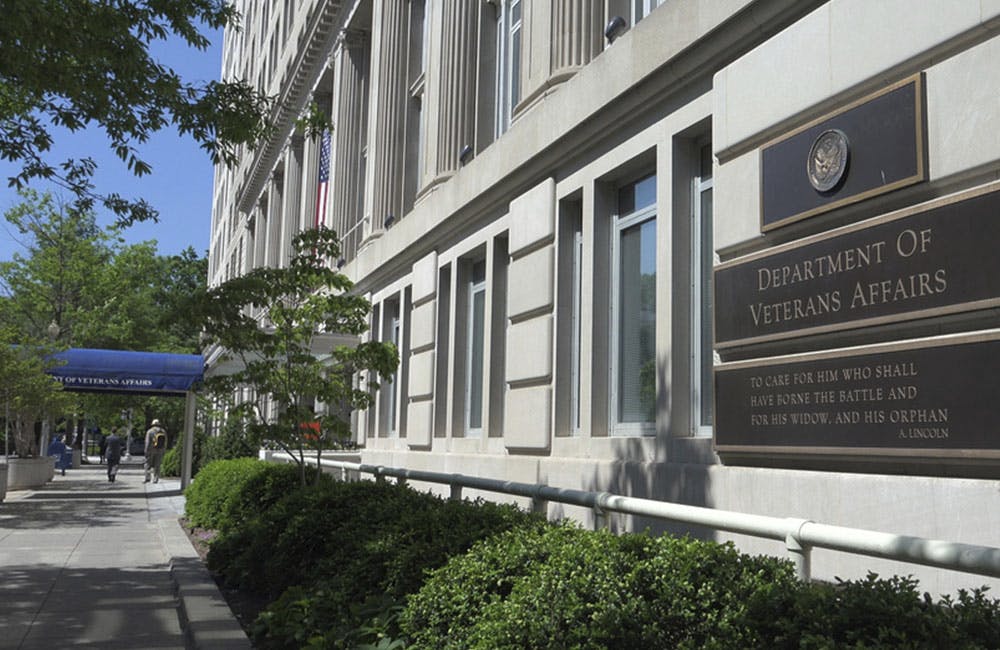
The Department of Veterans Affairs has expanded its artificial intelligence portfolio to 367 active use cases, positioning itself among the federal government’s top adopters of the technology as it seeks to improve claims processing, clinical care and cybersecurity operations to better serve veterans.
“First and foremost, it begins and stops with the veteran and their experience. How can we best improve their experience, their interaction with the VA across the board? … How can we really provide engagement that’s seamless, accelerates veterans’ experience from beginning to end?” said Howard Steinman, senior advisor in the VA Office of Information and Technology, speaking at the AFCEA Health IT Summit last week.
The VA is leading the federal government in the use of risk management and risk mitigation techniques to advance responsible AI deployments, Steinman said. “We want to make sure that we’re pushing the envelope from an AI-enabled to an AI-first environment, but doing so in a way that really is going to benefit better [user] experience,” he added.
One of the department’s most ambitious goals is reducing initial transition claims processing times for active-duty-to-veteran status from more than 45 days to five days or less through AI-enabled automation.
Steinman said the office is examining how different parts of the VA are using AI and then scaling successful approaches across the enterprise.
Generative AI at VA
The VA also is piloting Ambient Scribe, an AI-powered tool that records clinician-patient conversations and automatically generates clinical notes. Approximately 4,000 VA personnel are currently using the technology.
Traditionally, clinicians spend significant time documenting patient visits. Steinman said Ambient Scribe helps reduce that administrative burden, allowing providers to spend more time interacting with patients while generating timely and accurate records.
“You start doing that at scale and that has real impact for better time, better patient care and capturing those important records,” Steinman said.
Fighting Fraud, Waste and Abuse With AI
The VA is also leveraging AI to track down fraud and abuse, said Charles Miller, assistant inspector general for management and administration in the VA Office of Inspector General.
Miller said AI is helping the OIG identify vulnerabilities, detect potential fraud and better protect veterans’ data, improving the office’s ability to generate oversight findings and recover taxpayer dollars.
“When we’re providing oversight, we’re not only looking for those successes and changes, we’re looking for reductions in vulnerabilities and protecting veterans’ data so we don’t have loss. A lot of that is greatly enhanced through AI,” he said.
Leveraging AI for Cybersecurity
VA has seen some early results in applying AI to cybersecurity operations, Steinman said. He added that strong policies and governance have been critical to supporting those efforts.
Before the agency fields AI pilots, they undergo security reviews to ensure they are protected from cyber threats and are capable of safeguarding veterans’ sensitive data.
“We’re dealing with personal and health-related information, and we should have systems that protect that,” Steinman said.
As the VA expands AI adoption across the enterprise, officials said the department is relying on a secure technology foundation and a risk-based approach to implementation.


This is a carousel with manually rotating slides. Use Next and Previous buttons to navigate or jump to a slide with the slide dots
-

EPA CIO Tapped to be Next Federal CIO
Carter Farmer to take government’s top IT role after leading agency efforts around water sector cybersecurity, AI adoption and modernization.
2m read -

TEFCA Reaches 1.7B Transactions Amid AI-Ready Data Push
Health IT officials said the industry is embracing interoperability and new technologies to make health information usable in real time.
3m read -

America.gov Brings Generative AI to Federal Citizen Services
The site uses generative AI to help users find information and access services such as Medicare enrollment and passport applications.
2m read -

VA Employees Save 6 Hours a Week With AI Tools
VA AI chief Kimberly McManus said AI tools are helping improve veteran care, reduce opioid overdose mortality and save time for employees.
4m watch


