VA Focuses on High-Impact Use Cases in AI Strategy Update
The VA updated its AI strategy to focus on high-impact use cases, automation and key areas where innovation could be highlighted.

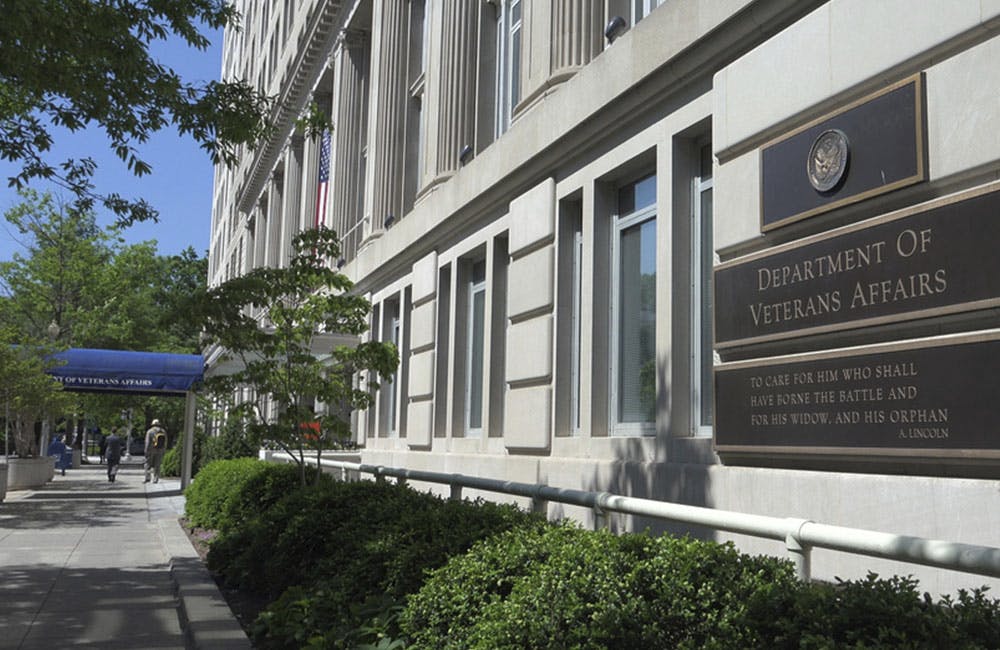
The Department of Veterans Affairs updated its AI strategy this week in an effort to “deliver measurable improvements in speed, quality, efficiency and accuracy,” while “fundamentally transforming the delivery of health care and benefits for veterans,” according to the document.
The updated strategy focuses on five key areas: expanding employee access to effective AI tools; reimagining workflows using AI and automation; investing in foundational data and infrastructure; developing an AI-capable workforce; and increasing veteran trust through transparency and strong governance.
“VA is taking a dual-track approach by enabling early AI experimentation while allowing those lessons to inform future standards,” the strategy states. “As AI tools are validated and show worth, they will be incorporated into the EHR and many other information technology platforms through coordination between innovators and the teams managing those systems today.”
The updated strategy prioritizes the adoption of “high-impact” use cases, which include “providing timely clinical care, helping a veteran navigate benefits or solving a complex customer service need.”
The Trump administration has made the adoption of high-impact use cases a pillar of its larger AI strategy. An April 2025 executive order directed agencies to define, implement and then adopt minimum risk standards for high-impact AI use cases across government.
High-impact AI generally influences decisions and actions that could affect civil rights and liberties, access to critical government resources like housing or education, health and safety, critical infrastructure or strategic assets, according to the executive order.
Building on VA’s Existing AI Foundation
The document outlines the current state of its initiatives while setting future goals for AI integration and adoption. Its release coincides with a concerted effort at the VA to modernize its electronic health record while also automating routine tasks to save time for employees.
“Thoughtful use of AI helps VA staff practice at the top of their craft, which might mean providing timely clinical care, helping a veteran navigate benefits or solving a complex customer service need,” Kimberly McManus, deputy chief AI officer and deputy CTO at the Department of Veterans Affairs, said in a LinkedIn post. “Our goal is to lead in effective, reliable and safe AI, delivering measurable improvements in speed, quality and efficiency for veterans.”
Augmenting VA’s Workforce with AI
Acting CIO Eddie Pool told GovCIO Media & Research in Aug. 2025 that VA OIT is focused on using automation to optimize its workforce and drive innovation.
“It’s process efficiency. We’re streamlining a lot of our operations and leveraging automation in a whole new way. In doing so we’re maximizing our efficiency and productivity with a much leaner and more capable workforce,” Pool said.
Veterans Benefits Administration’s Office of Benefits Automation director Becky Lindstrom told GovCIO Media & Research in Aug. 2025 that integrating AI into the workforce “starts early with humility,” as the tech is shaped around those who use it in their workflow.
“What is intuitive to you and I might not be as intuitive to the folks that are actually completing the claims,” Lindstrom said. “We tried to build trust with them before and not after the fact. We wanted to bring them to the table as we’re developing these tools so that they’re in that process right from the beginning.”
Advancing Next-Gen AI Tools
The VA announced last month that it plans to launch the first pilots of its ambient listening program at 10 facilities nationwide by the end of this year. The pilots will test the use of AI to capture and synthesize conversations between clinicians and patients, reducing the time clinicians spend reviewing and writing notes.
“We have established a series of criteria and evaluations as we roll this out that’s focused on user acceptance testing, veterans’ perceptions of the tool as it’s used in their ongoing trust in the care they receive, and just overall performance of the tool,” Dr. Evan Carey, acting director of the National Artificial Intelligence Institute, told congressional leaders in September 2025. “We are measuring clinician burden and getting clinician feedback, both synchronously and through survey mechanisms to understand the impacts.”
Dr. Kaeli Yuen, data and AI health product lead at VA’s Office of the CTO, said last year that VA will continue embedding generative AI fully into its operations as well, with a focus on increasing employee literacy and comfort with the technology.
“Our perspective is that in the not-too-distant future, generative AI is going to be embedded into most of the enterprise software that we use,” Yuen said in Oct. 2024. “However, as we’re waiting for that to happen, it is still worth it to build some things in-house, to learn, to build the capacity amongst employees to use these types of tools.”
This is a carousel with manually rotating slides. Use Next and Previous buttons to navigate or jump to a slide with the slide dots
-

Pentagon Shifts to Data-Centric Security to Boost Resilience
Officials are advancing zero-trust, mesh networking and acquisition reform to improve data quality, interoperability and speed.
6m read -

New DOL Framework Prepares Workers for Human-AI Collaboration
DOL's AI Literacy Framework encourages organizations to tailor AI skills training, emphasizing human-centered approaches.
3m read -

Trump Touts AI Energy Pledge, Drug Pricing Site in State of the Union
President Donald Trump addressed AI data center power consumption, promoted TrumpRx and spotlighted a national student AI initiative during his State of the Union address.
3m read -

Accelerating Federal Cloud Modernization
IT officials from CMS, DOE and NinjaOne discuss data readiness, security and change management for cloud modernization.
20m watch