Pentagon Leaders Must Give ‘Top Cover’ for Risk-Taking, DOW Official Says
Bonnie Evangelista says acquisition reform will fail without leadership support that allows for experimentation without penalty.
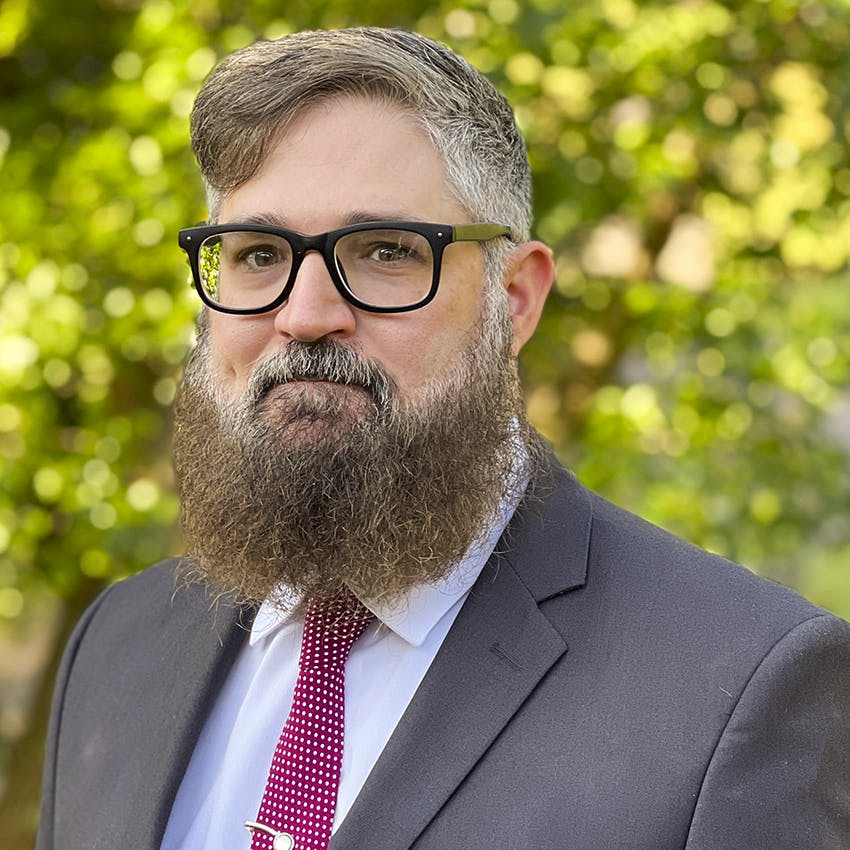

War Department and procurement officials need to take more risks and use available special authorities to deliver on the Pentagon’s new acquisition reform strategy, according to Bonnie Evangelista, senior advisor for Acquisition Policy at the Office of the Assistant Secretary of War.
“We want less red tape. We need more authority at lower levels,” Evangelista, said during the AFCEA NOVA February Luncheon on Friday in Reston, Virginia.
Evangelista, the former Deputy Chief Digital and AI Officer for Acquisitions at the Chief Digital and Artificial Intelligence Office (CDAO), said improving the acquisition system starts with acknowledging that existing policies are often underused. The challenge, she said, is not a lack of authorities or the ability to scale them, but a lack of risk-taking and awareness of the available pathways.
“Anyone in the Department of War can use [CDAO’s TradeWinds Marketplace] because [most of] the authorities and regulations that we’re using … are only applicable to defense,” Evangelista said.
Dismantling a ‘Culture of Fear’
Evangelista said a barrier to reform is what she called the “frozen middle” — layers of management between senior leaders and frontline practitioners who often feel paralyzed by the risk of failure. To create a truly effective system, Evangelista argued that leadership must offer more than just verbal support, they must provide genuine “top cover” that allows teams to risk, learn and fail without career-ending repercussions.
“I asked the leaders, ‘what are you going to do when someone fails?’ Because that’s what the fear culture and the compliance culture is all driven: By fear,” she said.
Evangelista added that even with revolutionary memos and executive orders, individual contracting officers may still default to standard, slow-moving processes out of a desire for administrative certainty.
“I’ve always told practitioners and people I would consider peers in the services who are doing like this type of work, don’t wait for the policy to save you,” Evangelista said. “Don’t wait for the leader to come save you. You have got to save yourself.”
Evangelista said that the DOW acquisition community needs a more inspired, proactive workforce. She lamented a model where staff feel like “wrench turners” executing someone else’s rigid plans.
“I’m very passionate about dreaming and creating a workforce that is inspired to dream, because the workforce is very much not inspired right now,” she stated. “Technology has actually given us a chance to be a creator at the practitioner level. Rather than leaders telling us what’s good for us, [acquisition professionals] can actually say, ‘hey, this actually might be good for us.’”
“They can raise their hand and say, ‘I have problems,’ and we can fit solutions to problems very quickly,” she added.
Evangelista added that sellers must understand both their products and the solicitations they respond to, and clearly connect them to mission outcomes, particularly how warfighters will use the capabilities.
“The buying community … is highly disconnected from the end user,” Evangelista said. “Talk to the acquisition community in a way that helps them understand that impact to the end user, not just how you’re meeting their acquisition requirement.”
AI offers a unique opportunity for practitioners to become more creative in problem solving, she said.
“Rather than us automating the bad workflow, [AI can] help us reimagine the workflow,” she said.” That’s what I really am trying to impress upon everyone at the practitioner level.”
Policy and Practice
Evangelista said that high-level policy changes, while headline-grabbing, are often meaningless if they do not change how people actually behave in the field.
“The actions and behaviors at the execution level will not change just because the words on the page changed,” she explained, noting that the department has been in a cycle of “acquisition reform” for decades without fundamentally shifting behaviors.
She said that the true differentiator between success and failure in defense acquisition is the mindset of the people throughout the system.
“I think we need a little discomfort to create new pathways and to get to the future everyone’s dreaming about right now,” she said, highlighting the need for a paradigm shift in addition to guidance from the secretary’s office.
Evangelista added that industry and DOW can connect more easily through more better risk management and creative thinking.
“We just need something that bridges the gap between a government buyer and a seller,” Evangelista said. “How do we do that?
This is a carousel with manually rotating slides. Use Next and Previous buttons to navigate or jump to a slide with the slide dots
-

U.S. Cyber Strategy Aims to Reset Adversaries’ Risk Calculus Amid Iran Threats
Sean Cairncross said the new strategy elevates U.S. cyber response expectations as Iran targets critical infrastructure during Operation Epic Fury.
3m read -

Building the Military Health System’s AI Ecosystem
DHA and Red Hat discuss building a secure AI ecosystem, strengthening data foundations and ensuring safe AI use in military health care.
10m watch -

Geopolitical Tensions Highlight Need for Resilient AI Supply Chains
The U.S. is working with global partners to strengthen AI supply chains and ensure continuity amid growing geopolitical risks.
3m read -

Pentagon Using AI to Protect Supply Chains
Defense agencies are using AI-driven models to detect risks across the Defense Industrial Base as Iranian cyber activity intensifies.
3m read